

Whether they’re preparing for football under Friday night lights, competing on the volleyball court, running cross-country trails, or training for wrestling, today’s high school athletes ask a lot of their bodies. Success isn’t measured only by points scored or races won. It begins with staying healthy enough to compete throughout the season.
For student-athletes across southwest Minnesota and eastern South Dakota, prioritizing health before, during, and after the season can reduce injuries, improve performance, and support long-term well-being.
Don’t Skip the Sports Physical
A sports physical is often the first step toward a healthy season. While schools require it before participation, the exam offers much more than a box-checking exercise.
During a sports physical, your healthcare provider reviews your medical history, assesses your overall health, and screens for conditions that could increase your risk of injury or illness during competition. It’s also a chance to discuss previous injuries, asthma, allergies, medications, or concerns about safely returning to sports.
Keep in mind that a sports physical is not a substitute for an annual wellness visit. A yearly checkup offers a more comprehensive evaluation of your overall health and helps identify concerns that may not affect athletic participation but are still important to address.
Fuel Your Body for Performance
Growing athletes need the right nutrition to keep up with demanding practices and competitions.
A balanced diet rich in lean proteins, fruits, vegetables, whole grains, and healthy fats supports muscle recovery, bone health, and sustained energy throughout the day. Skipping meals or relying on energy drinks and highly processed snacks can leave athletes fatigued and increase the risk of injury.
Hydration is equally important. Even mild dehydration can impair endurance, reaction time, and concentration. Athletes should drink water consistently throughout the day and increase their fluid intake before, during, and after exercise.
Recovery Is Part of Training
Many athletes believe that more practice always leads to better performance. In reality, recovery is just as important as training.
Getting enough sleep allows muscles to recover and helps the brain consolidate new skills learned during practice. Most teenagers should aim for eight to ten hours of sleep each night. Scheduling rest days and avoiding year-round competition in a single sport can also reduce the risk of overuse injuries and burnout.
Listening to your body is essential. Pain that doesn’t improve after a day or two of rest should not be ignored.
Take Injuries Seriously
Competitive athletes are tempted to “play through the pain,” but doing so can turn a minor injury into a season-ending problem.
Sprains, strains, stress fractures, tendon injuries, and shoulder or knee pain often start as minor issues. Early evaluation and treatment can shorten recovery time and help athletes return safely.
Working with healthcare providers and physical therapists ensures that injuries heal properly before returning to full activity.
Know the Signs of a Concussion
Concussions remain one of the most significant health concerns in youth sports. They can occur in football, soccer, basketball, wrestling, hockey, volleyball, cheerleading, and many other sports and activities.
Symptoms may include:
- Headache
- Dizziness
- Confusion
- Blurred vision
- Nausea
- Sensitivity to light or noise
- Difficulty concentrating
- Feeling unusually tired
Athletes should never ignore or hide these symptoms. Both Minnesota and South Dakota require athletes suspected of having a concussion to be removed from play and medically evaluated before returning to competition.
Early recognition and proper treatment help protect the developing brain and reduce the risk of more serious complications.
Make Health a Team Effort
Parents, coaches, athletic trainers, healthcare providers, and athletes all play an important role in keeping students healthy throughout the season.
Open communication about injuries, proper conditioning, healthy nutrition, and adequate recovery fosters an environment in which athletes can compete safely and perform at their best.
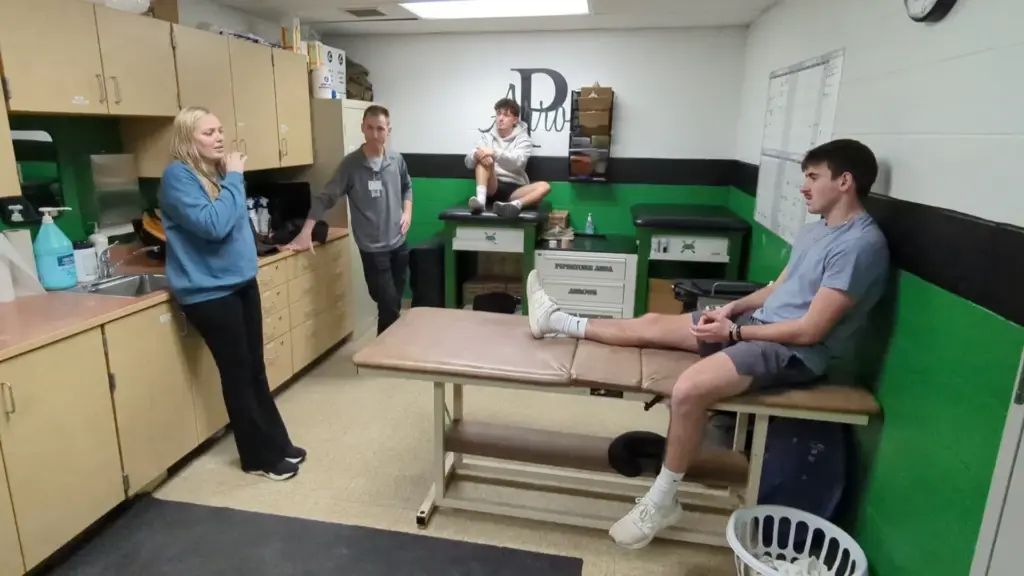
At Pipestone County Medical Center, Athletic Trainer Jeff Haufschild and Physical Therapist Michaela Surat are dedicated to helping local athletes prevent injuries, recover quickly, and return to the sports they love with confidence. Call 507-825-6054 for more information.