

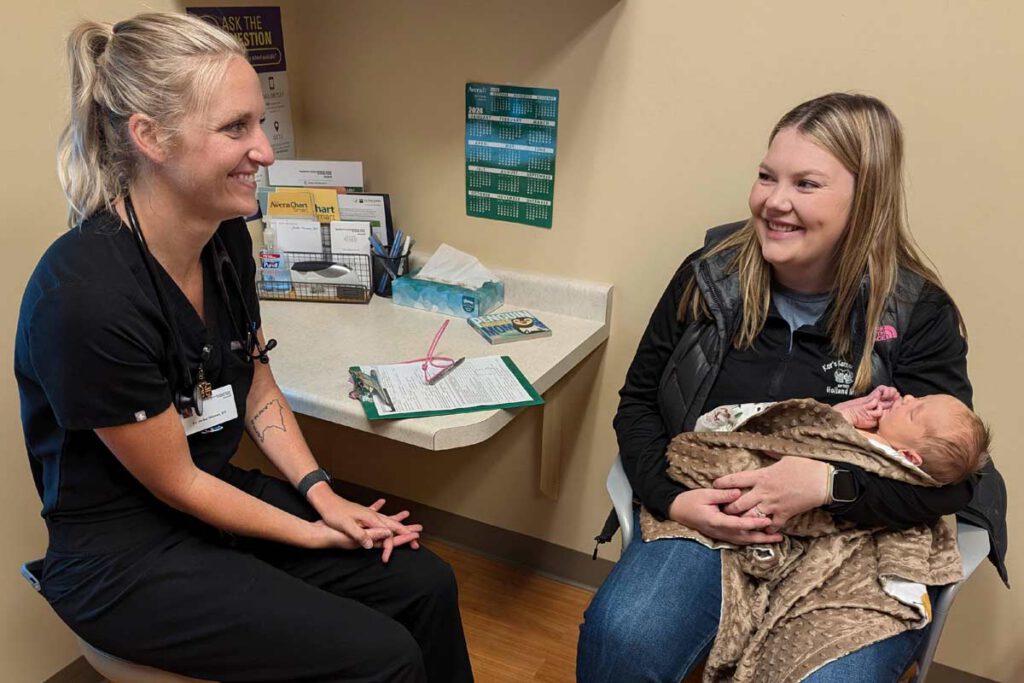
At Pipestone County Medical Center (PCMC), we understand that while mothers dedicate their energy and attention to their newborns, their own health needs sometimes fall by the wayside. In response, PCMC has integrated health screenings for biological mothers during well-child checks for children 24 months of age and younger.
“These screenings help mothers take a moment to focus on their health, which is crucial not only for their well-being but also for their ability to care for their child,” explains Amy Nelson, Clinic Director at PCMC. “We know that new mothers are often so focused on their children that they neglect their own healthcare needs. By offering these screenings during a routine well-child visit, we make it more convenient for them to address important risk factors without feeling overwhelmed.”
The screenings target modifiable risk factors such as smoking, depression, family planning, and prenatal or multivitamin use. Each of these factors can significantly impact a mother’s health, and addressing them early can lead to improved long-term outcomes for both mother and child.
Addressing Depression and Mental Health
One critical focus of these screenings is mental health, particularly postpartum depression, which affects a significant number of new mothers. Left unchecked, postpartum depression can lead to lasting emotional and psychological challenges. By screening mothers during their child’s well-child visit, PCMC ensures that mental health concerns are addressed early, helping mothers receive the support they need in a timely manner.
“Offering mental health screenings at the same time as well-child checks ensures that we can identify potential issues before they escalate,” Nelson adds. “Early intervention is key to providing mothers with the support they need to thrive.”
Encouraging Healthy Habits
Another essential aspect of these screenings is promoting healthy lifestyle choices, such as smoking cessation and proper nutrition. By identifying habits that can negatively impact a mother’s health, PCMC helps guide mothers toward healthier decisions.
“These conversations allow us to discuss family planning, which is often overlooked during postpartum care,” Nelson says. “It’s important for mothers to have access to resources that can support their family’s future planning needs, both for their own health and their child’s.”
By offering these essential screenings during well-child visits, PCMC is making it easier for mothers to prioritize their health while caring for their newborns.